Video Editing Trends in 2026: What Brands Should Know
Video has become one of the most important ways for brands to communicate, build trust, and connect with their audiences. From Instagram Reels and YouTube Shorts to LinkedIn campaigns, product demonstrations, and brand films, businesses are using video to explain their offerings and make their marketing more engaging.
However, creating a video that stands out in 2026 requires more than attractive visuals and smooth transitions. Audiences expect relevant stories, clear messaging, platform-specific formats, and content that feels authentic. At the same time, artificial intelligence (AI), automated editing tools, and changing viewing habits are reshaping how marketing teams produce video content.
According to Wyzowl, 91% of businesses use video as a marketing tool in 2026, while 93% of video marketers consider it important to their overall strategy. The figures highlight how firmly video has become part of modern marketing.
For brands, the challenge is no longer simply deciding whether to invest in video. It is understanding which video editing trends deserve attention and how to use them to achieve meaningful business results.
Here are the major video editing trends shaping 2026 and what businesses should know before updating their content strategy.
1. AI-Powered Video Editing Is Becoming Mainstream
Artificial intelligence is changing how editors approach time-consuming tasks. Activities that once required hours of manual work can now be completed faster with AI-assisted tools.
In its 2026 research, Wyzowl reports that 63% of video marketers have used AI video tools to create or edit marketing videos, up from 51% in the previous year's survey.
Some common applications include:
- Automatic subtitles: Generating captions and synchronising them with speech.
- Silence removal: Identifying pauses and unnecessary gaps in recordings.
- Background removal: Isolating subjects without requiring a physical green screen.
- Smart reframing: Adjusting footage for vertical, square, and horizontal layouts.
- Transcript-based editing: Editing spoken content by working with its transcript.
- AI-assisted audio cleanup: Reducing background noise and improving voice clarity.
These features can help marketing teams repurpose interviews, webinars, podcasts, and product demonstrations without starting every edit from scratch.
However, AI is not a replacement for editorial judgement. Automated tools can misinterpret speech, create unnatural transitions, or remove moments that contribute to a story. Human editors remain essential for maintaining brand consistency, pacing, emotional connection, and accuracy.
What brands should do: Use AI to reduce repetitive production work, but retain human review for storytelling, visual quality, brand messaging, and final approval.
2. Short-Form Videos Continue to Shape Brand Content
Short-form video remains a major format for social media marketing. Reels, Shorts, and other vertical videos allow businesses to communicate an idea quickly, demonstrate a product, or introduce their brand in a format suited to mobile viewing.
The opportunity is supported by consumer research. Wyzowl's 2026 report found that 84% of consumers want to see more videos from brands, while 63% would most like to learn about a product or service through a short video.
This does not mean every video needs to be a fast-paced clip lasting a few seconds. The right duration depends on the message, platform, and audience. A quick product feature may work well in 20-30 seconds, whereas a customer testimonial or tutorial may need more time.
Editing is what makes short-form content effective. Editors need to establish the subject quickly, remove unnecessary pauses, highlight important details, and create a natural flow that encourages viewers to keep watching.
Useful short-form video formats include:
- Product demonstrations and feature highlights.
- Quick educational tips and industry insights.
- Customer testimonials and success stories.
- Behind-the-scenes footage.
- Frequently asked questions and myth-busting videos.
- Short clips repurposed from longer interviews or events.
What brands should do: Build a repeatable short-form video strategy around audience questions and business goals. Focus on delivering one clear message per video rather than squeezing an entire campaign into a single clip.
3. Platform-Specific Editing Is More Important Than Ever
A video that performs well on Instagram may not deliver the same results on LinkedIn or YouTube. Each platform has different viewing habits, content expectations, and audience behaviours.
In October 2026, video-first experiences are becoming even more prominent across major social platforms. Recent reporting on Meta's product direction highlights experiments that place. This makes platform-specific editing an important part of a brand's content strategy.
Rather than publishing one identical video everywhere, brands should adapt the edit to the platform.
| Platform | Editing approach | Suitable content |
|---|---|---|
| Vertical framing, quick openings, readable captions | Reels, product highlights, brand stories | |
| YouTube | Strong narrative structure, clear pacing, informative visuals | Tutorials, explainers, long-form videos |
| Professional storytelling, clean graphics, concise messaging | Case studies, expert insights, company updates | |
| Accessible visuals, clear context, captions | Community stories, promotions, customer experiences | |
| YouTube Shorts | Vertical framing, focused storytelling, immediate context | Quick tips, demonstrations, short educational videos |
These are practical guidelines rather than strict platform rules. A detailed tutorial can work on LinkedIn, and a professional case study can succeed on YouTube Shorts if the story is adapted effectively.
What brands should do: Create a master edit and develop platform-specific versions wherever practical. Adjust the aspect ratio, opening, text placement, pacing, and call to action to suit each channel.
4. Authentic Content Is Outperforming Overly Polished Storytelling
Audiences are familiar with highly produced advertisements. While polished brand films still have a place, not every marketing video needs studio lighting, elaborate transitions, or a cinematic introduction.
In 2026, brands have good reason to experiment with more natural and relatable content. Behind-the-scenes footage, genuine customer experiences, employee interviews, informal product demonstrations, and founder-led videos can help audiences understand the people behind a business.
The editing style plays a major role in creating this feeling. Excessive retouching, constant transitions, artificial-looking effects, and overly scripted dialogue can make a video feel less believable.
A more authentic edit might retain a natural pause, use real workplace footage, or combine an employee's explanation with shots of the actual process. The goal is not to make every video look unprofessional. It is to make the production feel appropriate to the story.
For example, a software company explaining a new feature may benefit more from a clear screen recording with a genuine voice-over than from a heavily animated promotional film. Similarly, a hospitality brand may communicate its atmosphere more effectively through natural footage of its spaces, food, and guest experiences.
What brands should do: Match the production style to the message. Invest in high production value when it adds value, but do not sacrifice credibility just to make content look more elaborate.
5. Captions, On-Screen Text, and Accessibility Are Essential
Captions have moved beyond being an optional finishing touch. They help viewers follow a message in environments where sound is unavailable or inconvenient, and they make spoken content more accessible.
Wyzowl's 2026 research found that 89% of consumers believe video quality affects their trust in a brand.
Although quality includes multiple factors, legible text, clear speech, and well-presented visuals all contribute to the overall viewing experience.
Modern video editing workflows can improve accessibility through:
- Accurate, synchronised subtitles.
- Readable text with sufficient contrast.
- Clear visual hierarchy for titles and key points.
- Appropriate font sizes for mobile screens.
- Audio levels that keep speech easy to understand.
- Descriptive visual cues where they help explain the content.
Automated captions should always be checked manually, particularly for names, technical terminology, product features, and regional accents. An incorrect subtitle can change the meaning of a statement or make a professional video appear careless.
Editors should also avoid placing important text too close to the edges of a vertical video, where platform interface elements may obscure it.
What brands should do: Include captioning and accessibility checks in the editing process itself. They should be part of the standard delivery checklist, not last-minute additions.
6. Motion Graphics and Kinetic Typography Make Complex Ideas Easier to Understand
Motion graphics continue to offer brands a practical way to explain information that may be difficult to communicate through live footage alone.
Animated text, icons, charts, product diagrams, and interface demonstrations can make technical or abstract subjects easier to follow. This is especially useful for businesses operating in technology, finance, education, healthcare, and professional services.
For example, a technology company can use animated interface elements to explain how a software platform works. A manufacturing business can use motion graphics to illustrate its production process, while a digital marketing agency can visualise campaign performance through animated data.
Kinetic typography, in which text moves in coordination with speech or music, is also useful for emphasising key messages in short-form videos.
However, motion graphics should serve a purpose. Too many animated elements can distract viewers, increase visual clutter, and make the brand feel inconsistent.
What brands should do: Use motion design to clarify, emphasise, or simplify information. Maintain consistent typography, colours, animation speed, and graphic styles across campaigns.
7. Smarter Sound Design Is Becoming a Competitive Advantage
Video editing is often discussed in terms of visuals, but sound has an equally important role in shaping the viewing experience.
Music establishes mood, sound effects add emphasis, and clean dialogue helps audiences understand the message. Even a visually impressive video can feel unfinished when its audio is inconsistent or poorly balanced.
In 2026, brands should pay closer attention to the relationship between sound and storytelling. Rather than adding background music simply to fill silence, editors can use sound intentionally to support the message.
Examples include:
- Subtle sound effects that reinforce product interactions.
- Clean dialogue with consistent volume.
- Music that complements the brand's personality.
- Carefully timed audio transitions.
- Natural ambient sound in hospitality, lifestyle, and behind-the-scenes videos.
- Music licensed for the intended commercial use.
AI-assisted noise reduction and dialogue enhancement can help improve recordings, particularly when footage is captured outside a professional studio. Nevertheless, aggressive processing can make voices sound artificial, so the final result needs careful listening.
Copyright also matters. A song available in a social media music library may not automatically be licensed for every commercial, advertising, or cross-platform use.
What brands should do: Treat audio as a core part of post-production. Review dialogue clarity, music levels, sound effects, and licensing before approving a video for publication.
8. Repurposing Long-Form Content Is Improving Production Efficiency
Brands increasingly have access to valuable footage from webinars, podcasts, interviews, product launches, conferences, and training sessions. Instead of using this material only once, editing teams can turn it into multiple pieces of content.
This approach is especially useful for businesses that want to publish consistently without organising a new shoot for every post.
A single 30-minute interview, for instance, might provide material for:
- A full-length YouTube interview.
- Three to five short educational clips.
- A LinkedIn video featuring a key insight.
- A short customer quote or testimonial.
- A website video highlighting a specific service.
- A collection of short clips for a future campaign.
The important step is not simply cutting a long video into smaller sections. Each version needs a clear beginning, sufficient context, and an appropriate ending.
A clip that starts halfway through a sentence may make sense to someone who watched the full interview but confuse a new viewer. Editors should restructure the material so every clip works independently.
AI-assisted transcription and scene detection can speed up the search for useful moments, while human editors can refine the selection, pacing, and message.
What brands should do: Plan content repurposing before recording. Capture footage in ways that support both horizontal and vertical formats, and identify several potential content angles during pre-production.
9. Cinematic Visuals and Colour Grading Are Strengthening Brand Identity
Cinematic editing is not limited to films and television. Brands are using intentional colour grading, thoughtful framing, controlled pacing, and carefully selected shots to create a more recognisable visual identity.
This trend is particularly relevant to luxury brands, hospitality businesses, fashion labels, real estate companies, and premium product manufacturers. In these industries, the atmosphere surrounding a product can be as important as its practical features.
Colour grading helps establish that atmosphere. Warm tones may complement a welcoming, lifestyle-focused brand, while neutral colours and controlled contrast can support a clean, contemporary visual identity.
The aim is not to apply the same cinematic filter to every video. It is to develop a consistent visual language that reflects the brand's positioning.
For example, a luxury resort may use slower transitions, natural ambient sound, detailed close-ups, and carefully graded footage to communicate its setting. A technology company, on the other hand, may benefit from sharper cuts, clean graphics, and a brighter visual style.
What brands should do: Establish a basic visual style guide covering colour, contrast, typography, transitions, framing, and logo placement. Consistency across videos can make a brand easier to recognise.
10. Data-Driven Editing Is Connecting Creativity With Results
One of the most important video marketing trends in 2026 is the growing emphasis on performance. A video may look excellent, but brands also need to understand whether it attracts attention, communicates its message, and encourages the intended action.
Wyzowl's 2026 report offers a useful perspective:
- 82%: Marketers reporting good video marketing ROI
- 85%: Reporting that video helped generate leads
- 83%: Reporting that video directly increased sales
- 93%: Reporting improved product or service understanding
Source: Wyzowl, Video Marketing Statistics 2026. These figures represent marketers' reported experiences, not guaranteed outcomes for every business.
These findings suggest brands should evaluate video beyond its appearance or view count.
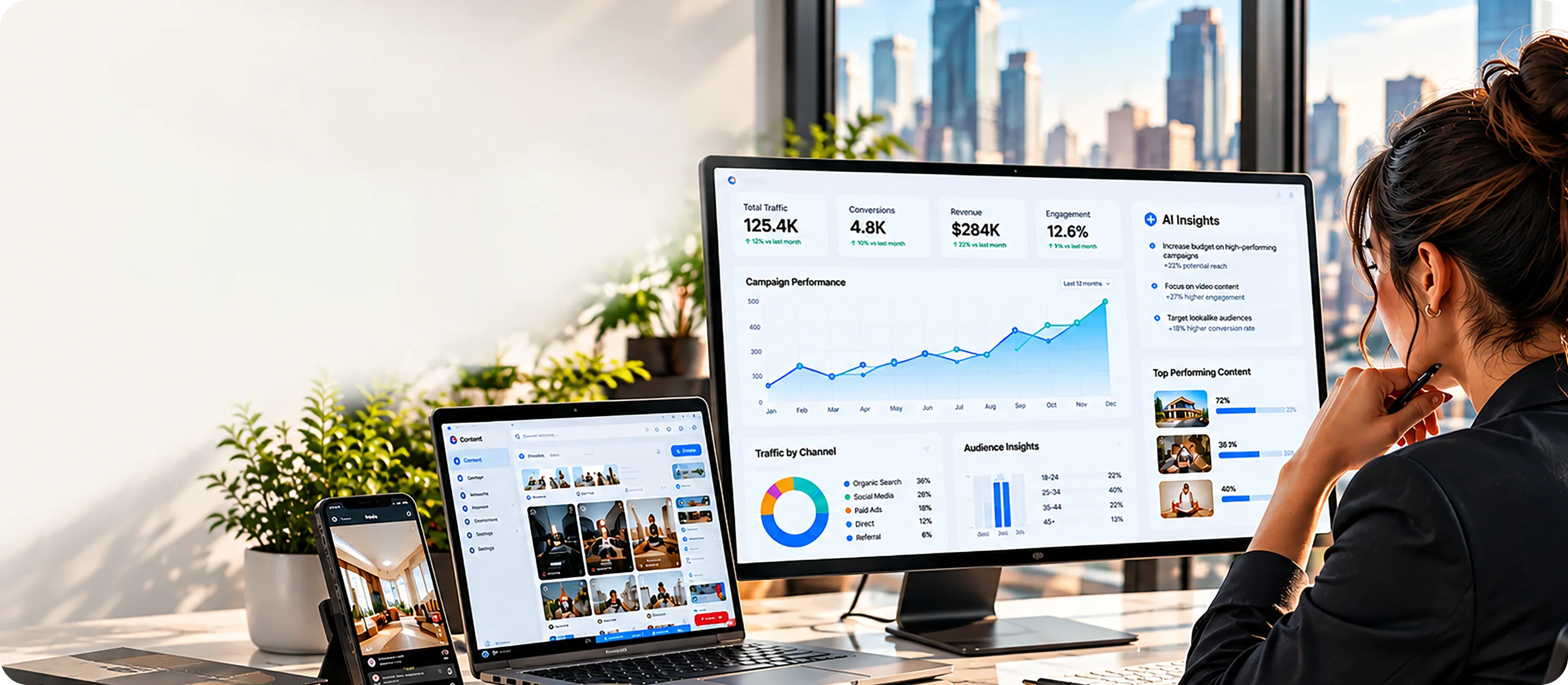
Performance data can help editors identify where viewers lose interest, which opening scenes retain attention, whether captions improve comprehension, and which formats generate meaningful engagement.
For example, if viewers consistently leave a product video before its main benefit appears, the editor might introduce that benefit earlier. If a tutorial drives website visits but few enquiries, the brand may need a clearer call to action or a stronger link between the video and its landing page.
What brands should do: Review retention, completion rate, engagement, clicks, leads, and conversions according to the campaign objective. Use the findings to improve subsequent edits rather than relying on assumptions.
How Brands Can Adapt to Video Editing Trends in 2026
Following every trend is neither practical nor necessary. Brands need a workflow that balances creativity, production efficiency, and measurable outcomes.
Here is a simple approach to getting started.
- Define the objective. Decide whether the video needs to build awareness, explain a product, generate enquiries, or support existing customers.
- Choose the right format. Select short-form, long-form, testimonial, explainer, or promotional video according to the audience and message.
- Plan for multiple platforms. Consider aspect ratios, captions, text placement, and alternative edits before production begins.
- Use technology thoughtfully. Apply AI to repetitive tasks while retaining human oversight of creative decisions and accuracy.
- Maintain brand consistency. Establish guidelines for colours, fonts, sound, transitions, and visual tone.
- Measure and improve. Track relevant performance metrics and use audience behaviour to guide future editing decisions.
For businesses with limited resources, starting with a small number of repeatable video formats is often more effective than investing in complicated production workflows immediately.
Conclusion
Video editing in 2026 is becoming more strategic, efficient, and closely connected to business goals. AI-assisted workflows are reducing repetitive tasks, short-form video is creating new opportunities for audience engagement, and platform-specific editing is helping brands communicate more effectively across channels.
At the same time, authentic storytelling, accessible captions, thoughtful sound design, motion graphics, and consistent visual identities remain important. Technology can accelerate production, but it cannot replace an understanding of the audience or a clear creative direction.
For brands, the real opportunity lies in combining these trends rather than treating each one as an isolated tactic. The strongest video strategies use the right format, tell a relevant story, maintain quality, and learn from performance.
Businesses that approach video editing as an essential part of their communication strategy can build more consistent content, strengthen brand recognition, and create videos that serve a clear purpose.